| Advertisement No: | #00204288 |
| Category: | Biodiesel Making Machine |
| Brand: | Atılım Makina |
| Model Type: | A-BM001 |
| Product Type: | For Sale |
| Product Status: | New |
| Origin: | Turkey |
| Location: | Kayapınar Mah. / Dilovası / Kocaeli |
| Sales Detail: | Bank Transfer, Negotiated |
| Delivery Status: | In stock |
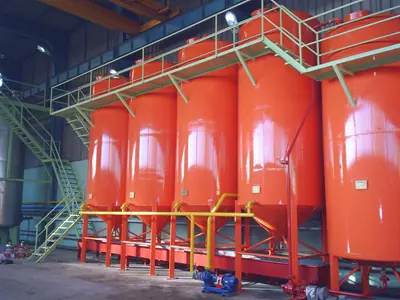
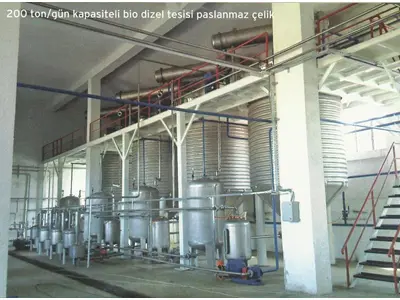
We manufacture these plants as turnkey projects. Our company produces biodiesel plants as turnkey. In addition to the normally produced batch reactor system, we ensure production in accordance with EPDK standards with very high quality and specifications thanks to THIN FILM integration. In the normal batch reactor system, the desired quality cannot be achieved, which causes the produced biodiesel to be of low quality and harm the engines of vehicles. However, thanks to THIN FILM distillation, methyl ester is separated from unwanted substances, thus high-quality biodiesel is obtained. As ATILIM MAKİNA, we manufacture turnkey biodiesel plants. Biodiesel is an alternative fuel equivalent to conventional fossil diesels. Biodiesel can be produced from animal and vegetable oils, wax oil, and household waste oils. The process that converts these oils into biodiesel is called transesterification. The most important usable oil sources are oily products such as rapeseed, palm, and soybeans. Among these, the most commonly used product for biodiesel production is rapeseed. Most of the biodiesel produced today is made using waste vegetable oil from industrial food producers and large restaurants. Since the cost of crops produced for biodiesel production, such as rapeseed oil, is much higher than the cost of waste oils, the amount of biodiesel produced from waste oil is much greater. Biodiesel is very important in terms of environmental pollution. Biodiesel is referred to as 'neutral carbon'. This means that there is no additional carbon emission in the form of carbon dioxide after it is used as fuel. The reason for this effect is that the plants used in biodiesel production absorb the amount of carbon dioxide they emit during the combustion phase as fuel during their growth stage. However, it should not be forgotten that the fertilizers used in the growth stage of the produced plants also emit a significant amount of carbon dioxide. It would also be incorrect to limit the pollution sources related to biodiesel production only to fertilizers. Other pollution sources encountered during biodiesel production include esterification, oil solvent extraction, refining, drying, and transportation processes. All these processes require a certain amount of energy input in the form of electricity or fuel, and both ultimately emit greenhouse gases into the environment. However, its ability to decompose quickly in the soil and its lack of toxic effects make biodiesel waste much less risky than fossil fuel waste, and these features are considered one of its most important advantages. Another significant detail is that the flash point is higher compared to fossil fuels. This feature particularly reduces the risk of explosion in accidents. Biodiesel Production: As mentioned above, biodiesel can be produced from vegetable oils, animal fats, wax oil, and waste oils. Today, three main methods are followed for biodiesel production from oils. These are; transesterification of oil with base catalysis, transesterification of oil with direct acid catalysis, and conversion of oil into fatty acids to produce biodiesel. Almost all biodiesels are produced using the base-catalyzed transesterification method, which is the most economical method, requiring only low temperature and pressure, and achieving approximately 98% yield. Therefore, we will focus on this method in this article. The transesterification process involves the reaction of triglyceride with alcohol to form ester and glycerol. The basic structure of a triglyceride consists of glycerin molecules containing three long-chain fatty acids. The characteristic of the oil is determined by the structure of the fatty acid attached to the glycerin in its composition. This structure of fatty acids also determines the characteristics of biodiesel. During the esterification process, in the presence of a catalyst, triglyceride and alcohol molecules react. As a result of the reaction between fatty acids and alcohol, mono alkyl ester or biodiesel and crude glycerol are formed. The alcohol chosen for the reaction is usually methanol or ethanol. The catalyst used is usually sodium hydroxide or potassium hydroxide, which is a strong base. While potassium hydroxide is more useful for ethyl esters during biodiesel production, both can be used for methyl esters. The most common transesterification process is the reaction of rapeseed oil with methanol, known as RME. A reversible reaction occurs between oil and alcohol. Therefore, to increase the yield, an excessive amount of alcohol must be added to the environment. To obtain a successful transesterification reaction, it is necessary to separate the glycerol and ester layers after the reaction is completed. After the heavier glycerol, which settles at the bottom, is separated from the environment, it can be purified for use in different industries such as pharmaceuticals and cosmetics. Some vegetable oils with very high viscosity can cause low atomization of the fuel, incomplete combustion, clogging of injectors, and accumulation of fuel in the engine oil. The transesterification process prevents these potential problems.The benefits of performing the transesterification process in oils can be listed as follows: Decrease in viscosity These catalysts dissolve in alcohol with the help of a standard mixer. The alcohol/catalyst mixture is then transferred to closed reaction vessels, and the oil to react with is added on top. This system is completely closed to prevent alcohol loss during the reaction. The reaction mixture is kept at a temperature just above the boiling point of alcohol for a rapid reaction time. The recommended reaction time is between 1 and 8 hours, and for some systems, it is suggested that the reaction be carried out at room temperature. To ensure complete conversion, an excess of alcohol is added to the environment. The amount of free fatty acids and water in the oil to be reacted must be closely monitored. If the level of fatty acids or water is too high, problems such as soap formation and difficulty in removing glycerin from the environment may occur. Separation After the reaction is completed, two main products are formed: glycerin and biodiesel. Each contains an excess of the methanol used in the reaction, so if desired, neutralization can be applied at this stage. The glycerin phase can be separated gravimetrically from the biodiesel phase because it is much denser. In some cases, a centrifuge can be used to facilitate the separation. Removal of Alcohol After the glycerin and biodiesel phases are separated, the excess alcohol in both phases can be separated by distillation or evaporation. In some systems, alcohol can also be removed before the separation of glycerin and biodiesel phases and neutralized. In both cases, alcohol is recovered and can be reused. At this stage, care should be taken to prevent the mixing of alcohol with water. Neutralization of Glycerin The glycerin, which is a by-product of the reaction, contains unused catalyst and soap. Therefore, glycerin is neutralized with acid to make it usable for different purposes. In some cases, salt is formed at this stage, and this salt can also be used as fertilizer. Most of the time, this salt remains in the glycerin. To obtain crude glycerin, the obtained glycerin must be separated from alcohol and water to reach 80-88% purity. By applying some special procedures, the purity of the obtained glycerin can even be brought to 99% level. Methyl Ester Washing Biodiesel, which is separated from glycerin, is sometimes washed with hot water to remove the catalyst or soap it contains, and then dried to be ready for consumption. In some processes, this step may not be necessary. This stage is the final part of the production process, resulting in a greenish amber-colored liquid with a viscosity identical to that of petroleum diesel. In some systems, biodiesel may also undergo a final distillation step to remove the color substances it contains. After this step, colorless biodiesel is obtained. Product Quality Before the obtained product is offered for commercial use, it is analyzed with special devices to test whether it meets the necessary specifications. The parameters checked to ensure that biodiesel is produced without any issues are:Atılım Makina Bio Diesel Plant
Some vegetable oils can also be used directly instead of fossil diesel, but the risk of causing serious engine problems is very high.
Complete removal of glycerides
Decrease in boiling point
Decrease in flash point
Increase in fluidity
Mixture of alcohol and catalyst
Sodium hydroxide (caustic) and potassium hydroxide (potash) are used as catalysts.
It should not contain glycerin
It should not contain catalyst
It should not contain alcohol
It should not contain free fatty acids
Makinaturkiye.com Return Policy
Purchases made through Makinaturkiye.com offer a safe shopping experience with customer satisfaction at the forefront. Instead of completing a direct payment transaction, the purchase button creates a purchase form, connecting the seller and the buyer. In this process, product returns are evaluated under the Turkish Consumer Rights Regulation and are handled within the determined legal framework.
Return Process and Conditions
Return Period:
Eligible Products for Return:
How to Return a Product:
Refund Process After Return:
Non-Returnable Products:
Return Rights Under Turkish Consumer Law
Right of Withdrawal:
Defective Product Return:
For Your Return Requests Makinaturkiye.com acts as a bridge between the buyer and the seller. To get detailed information about the return process or to create a request, you can contact the seller directly through the purchase form.
| Country | Currency | Minimum Shipping Rate | Maximum Shipping Rate |
|---|