
| Advertisement No: | #00225787 |
| Category: | Multiple Water Softening Systems |
| Brand: | Ao Smith |
| Product Type: | For Sale |
| Product Status: | New |
| Origin: | Turkey |
| Location: | / Ataşehir / İstanbul |
| Sales Detail: | Bank Transfer, Negotiated |
| Delivery Status: | In stock |
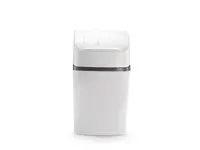
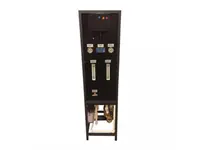
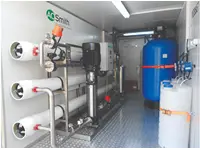
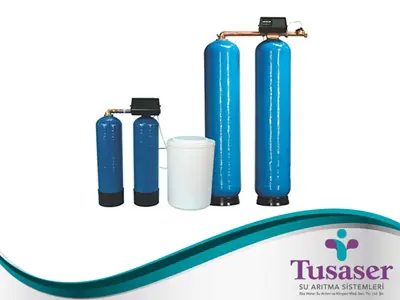
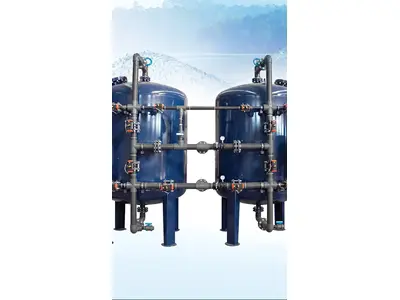
Water softening devices are used to separate Calcium (Ca+) and Magnesium (Mg+) ions, which cause hardness, from water. The water softening process is based on the ion exchange principle that falls under the chemical purification section. The ion exchange process, which uses synthetic resins as filter material, occurs by passing water containing hardness-causing (Ca+) and (Mg+) ions through a sodium-based cationic resin. During this transition, the water softening process takes place as the Ca and Mg+ ions in the water exchange places with the Sodium (Na+) ions attached to the resin. The water softening process continues until the surfaces of the resin grains are completely covered with hard water minerals. When the surfaces of the resins are fully covered, they need to get rid of the hardness ions on their particles and recharge with sodium ions to regain hardness. This process is called regeneration. Calcium and Magnesium in the water adhere to the resin. What Should Be Considered When Choosing a Water Softening Device? Choosing the tank according to the amount of resin to be used, Determining the amount of resin to be used, Calculating the peak flow and nominal flow according to the water hardness value, Choosing the appropriate speed of water passing through the tank, Most importantly, the factors that negatively affect the softening of the water must be eliminated before softening. Uses of Soft Water Food industry Pre-treatment system before reverse osmosis Chemical industry Pharmaceutical industry Surface water treatment Groundwater treatment Clean water supply Pre-treatment system before boiler feed water Deionization systems Deionization treatment systems are designed to meet the needs of industries such as glass industry, laboratories, pharmaceutical industry, cosmetics, textiles, and energy sector that require high-quality pure water. Untreated raw waters contain negatively charged anions and positively charged cations. Units that perform deionization are referred to as cationic units for the removal of cationic ions and anionic units for the removal of anionic ions. In some cases, the removal of cations and anions is done in the same unit, and these types of units are called mixed bed ion exchangers. In this unit, water is first passed through cationic resin to replace positively charged ions with hydrogen ions, and then through anionic resin to replace negatively charged ions with hydroxide ions. Thus, a high degree of pure water is obtained. As a result of use, the resins reach saturation and the efficiency of the process decreases; in this case, cationic resin is regenerated with acid and anionic resin with caustic. Thanks to the regeneration process, the resins regain their decreasing efficiency. The deionization process varies depending on many factors such as water quality and economy, type of ion exchange, and method of regeneration. Applications of deionization systems; In the Automotive Sector In Industrial Facilities with High Demand for Pure Water In Chemical Products In Cosmetic Products In the Pharmaceutical Industry In Surface Coating Factories Dealkalization systems Dealkalization systems; The alkalinity of water is the phenomenon of pH rising due to the carbonates and bicarbonates present in the water. Dealkalization systems are installed before softening systems, reducing the workload and salt consumption of your softening system while also decreasing the chemicals used by 6-8%. Thus, system efficiency and service life are increased. Ao Smith
Multi Water Softening Systems
The use of waters with high alkalinity negatively affects the work quality of many sectors such as textiles, cosmetics, pharmaceuticals, and energy, which require pure water in their processes due to the formation of white precipitate and similar problems. While the hardness in water is removed using sodium-based resins, the removal of alkalinity in water is done using carbonate and bicarbonate selective anionic resins.
Makinaturkiye.com Return Policy
Purchases made through Makinaturkiye.com offer a safe shopping experience with customer satisfaction at the forefront. Instead of completing a direct payment transaction, the purchase button creates a purchase form, connecting the seller and the buyer. In this process, product returns are evaluated under the Turkish Consumer Rights Regulation and are handled within the determined legal framework.
Return Process and Conditions
Return Period:
Eligible Products for Return:
How to Return a Product:
Refund Process After Return:
Non-Returnable Products:
Return Rights Under Turkish Consumer Law
Right of Withdrawal:
Defective Product Return:
For Your Return Requests Makinaturkiye.com acts as a bridge between the buyer and the seller. To get detailed information about the return process or to create a request, you can contact the seller directly through the purchase form.
| Country | Currency | Minimum Shipping Rate | Maximum Shipping Rate |
|---|



 Send Inquiry


 Go to the store
 All Ads


 Send Message
 Fast Chat

 Brokerless Trade without Commission
 All Communication Channels
 Available on mobile phones
 Open a Store and Post an Ad